
Clay Center, KS – September 23, 2026 – PRESSADVANTAGE –
Wilder Auto Body has published new September consumer guidance explaining what OEM certification means in collision repair and how manufacturer-specific repair information can influence the development of a repair plan.
The update addresses an important distinction for vehicle owners after an accident: OEM certification and OEM repair procedures are related, but they are not the same thing.
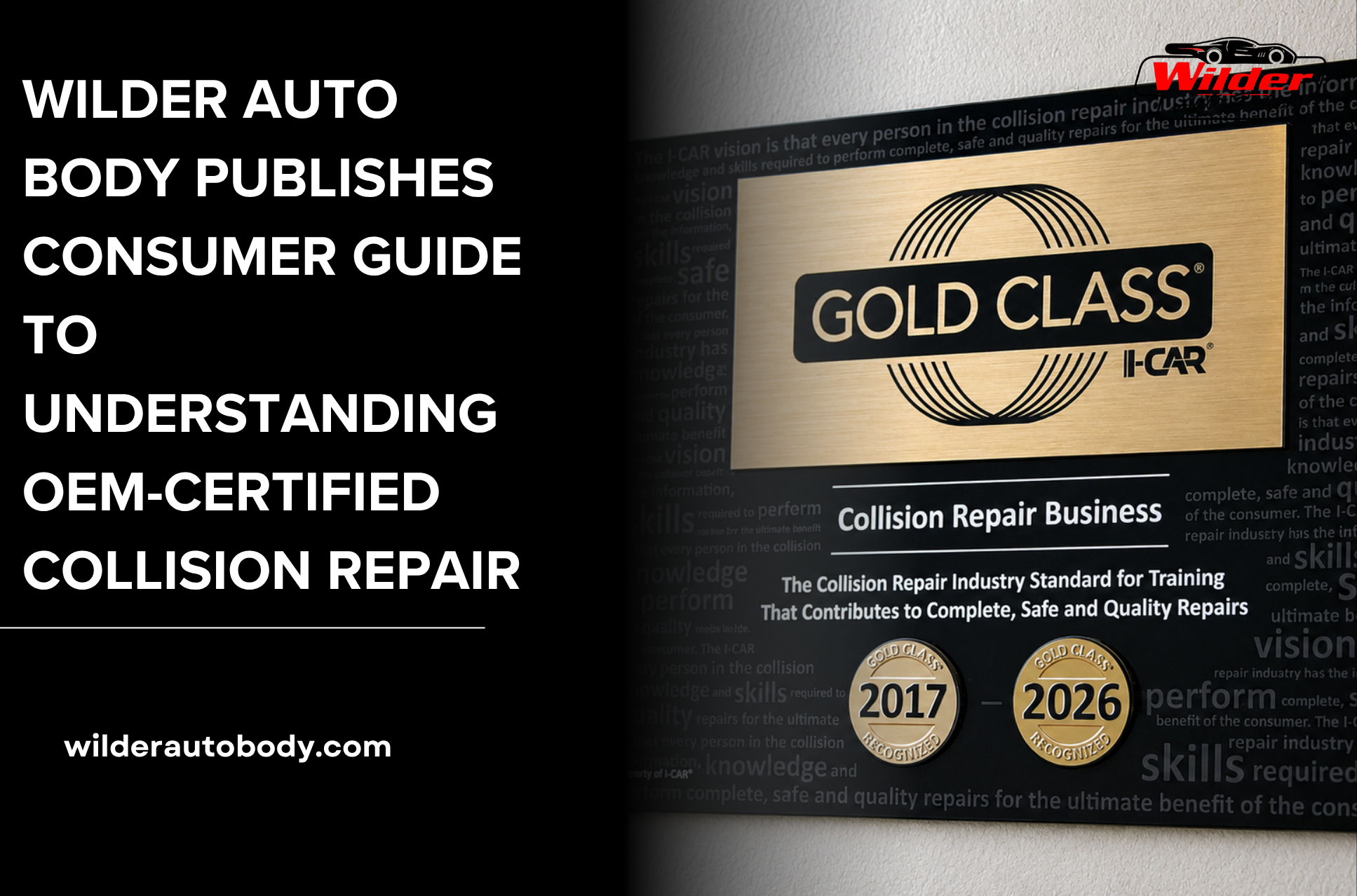
Wilder Auto Body’s September resource explains the roles of manufacturer certification programs, technician training, repair equipment, access to technical information, and vehicle-specific procedures. The information is intended to help consumers better understand terminology they may encounter when selecting a repair facility or reviewing collision repair documentation.
The updated information is available through Wilder Auto Body’s OEM Certifications resource.
OEM certification programs can establish requirements for participating collision repair facilities. Depending on the program, those requirements can involve areas such as technician training, tools, equipment, facility capabilities, and access to manufacturer repair information.
Manufacturer repair procedures serve a different purpose. Automakers publish technical information applicable to particular vehicles, components, and repair operations. Depending on the vehicle and affected area, this information can address repairability, replacement requirements, joining methods, measurements, attachment locations, corrosion protection, diagnostic procedures, and other aspects of collision repair.
The September update emphasizes this distinction because certification alone does not determine how a damaged vehicle will be repaired.
A repair plan begins with the individual vehicle and its documented condition. The make, model, model year, affected components, construction, installed technology, and applicable technical information can provide context for determining which procedures are relevant.
Technician training is another area addressed in the updated resource.
Contemporary vehicles can incorporate high-strength steels, aluminum, plastics, composites, adhesives, electronic equipment, and other technologies. Training associated with manufacturer certification programs can support technicians in understanding evolving vehicle construction and researching applicable repair information.
The guidance does not suggest that certification training establishes a universal repair method. Instead, it explains how technical knowledge and access to repair information can support vehicle-specific repair planning.
Tools and equipment are addressed in the same context.
Collision repair can involve measuring systems, welding equipment, aluminum-specific tools, diagnostic technology, and other resources depending on the work being performed. Manufacturer certification programs can establish equipment requirements associated with procedures covered by a particular program.
This does not mean every collision-damaged vehicle requires every capability available at a certified facility. The equipment used depends on the repair operations applicable to the individual vehicle.
Wilder Auto Body provides additional information about vehicle evaluation and repair planning through its Collision Repair resource.
The September consumer update also explains why manufacturer information can be relevant when deciding whether a damaged component should be repaired or replaced.
Visible damage alone may not establish the appropriate operation. Component construction, material, damage location, attachment areas, accessibility, and manufacturer repair limitations can influence repairability.
The same principle can apply when replacement is appropriate. Modern manufacturers can use welds, rivets, adhesives, mechanical fasteners, or combinations of joining methods. Applicable technical information can identify the procedures associated with a particular component and vehicle.
Rather than presenting these operations as separate considerations, Wilder Auto Body’s September update connects them to a central aspect of OEM-focused collision repair: identifying and researching the technical requirements relevant to the vehicle being repaired.
Modern vehicle electronics provide another example.
Cameras, radar units, parking sensors, electronic modules, and other advanced driver-assistance system equipment can be incorporated into bumpers, windshields, mirrors, lamps, and other areas potentially involved in collision repairs.
When repair operations affect these areas, manufacturer information can identify whether scanning, calibration, initialization, or another related procedure applies.
The presence of ADAS equipment does not automatically establish that calibration is required after every collision. Requirements depend on the vehicle, affected systems, components involved, and repair operations performed.
Additional consumer information about these procedures is available through Wilder Auto Body’s ADAS Calibration resource.
Repair documentation is another component of the September guidance.
An initial evaluation can document the vehicle and observable collision damage. As repair planning progresses, additional findings and manufacturer research can identify procedures applicable to affected areas.
For consumers, this documentation can provide context for terminology such as OEM procedures, component replacement, joining methods, scanning, or calibration when those terms appear in a repair plan.
The updated information also clarifies what OEM certification does not represent.
Certification does not guarantee a particular repair outcome, eliminate the need to evaluate an individual vehicle, or mean that every collision follows the same repair sequence. Certification reflects participation in manufacturer programs with established requirements, while the repair plan itself remains specific to the vehicle, documented damage, and applicable technical information.
This distinction gives consumers a more precise way to understand OEM certification. Rather than viewing certification as a single repair method, vehicle owners can understand it as a framework involving manufacturer program requirements, training, equipment, technical information, and vehicle-specific repair procedures.
By publishing the September consumer update, Wilder Auto Body is providing a more focused explanation of OEM-certified collision repair and separating certification-program requirements from the manufacturer procedures used when planning individual repairs.
The information is educational and does not establish which procedures a particular collision-damaged vehicle requires without evaluation.
About Wilder Auto Body
Wilder Auto Body is a family-owned auto body repair business serving Clay Center and surrounding Kansas communities. The company provides collision repair, auto body repair, paintless dent repair, hail damage repair, ADAS calibration, aluminum repair, towing, and related vehicle repair services.
###
For more information about Wilder Auto Body Inc, contact the company here:
Wilder Auto Body Inc
Kyle Wilder
(785) 632-3484
office@wilderautobody.com
138 E Crawford St, Clay Center, KS 67432


