The Business Research Company’s Enzyme Replacement Therapy for Rare Lysosomal Storage Disorders Global Market Report 2026 Market Size, Trends, And Forecast 2035
LONDON, GREATER LONDON, UNITED KINGDOM, September 17, 2026 /EINPresswire.com/ — The enzyme replacement therapy market for rare lysosomal storage disorders has witnessed significant growth recently, reflecting advancements in diagnosis and treatment options. As awareness and healthcare investments increase, this specialized market is set to expand even further in the coming years. Let’s explore the current market size, key growth factors, regional dynamics, and emerging trends shaping the future of this important therapeutic area.
Market Growth and Size Outlook for Enzyme Replacement Therapy in Rare Lysosomal Storage Disorders
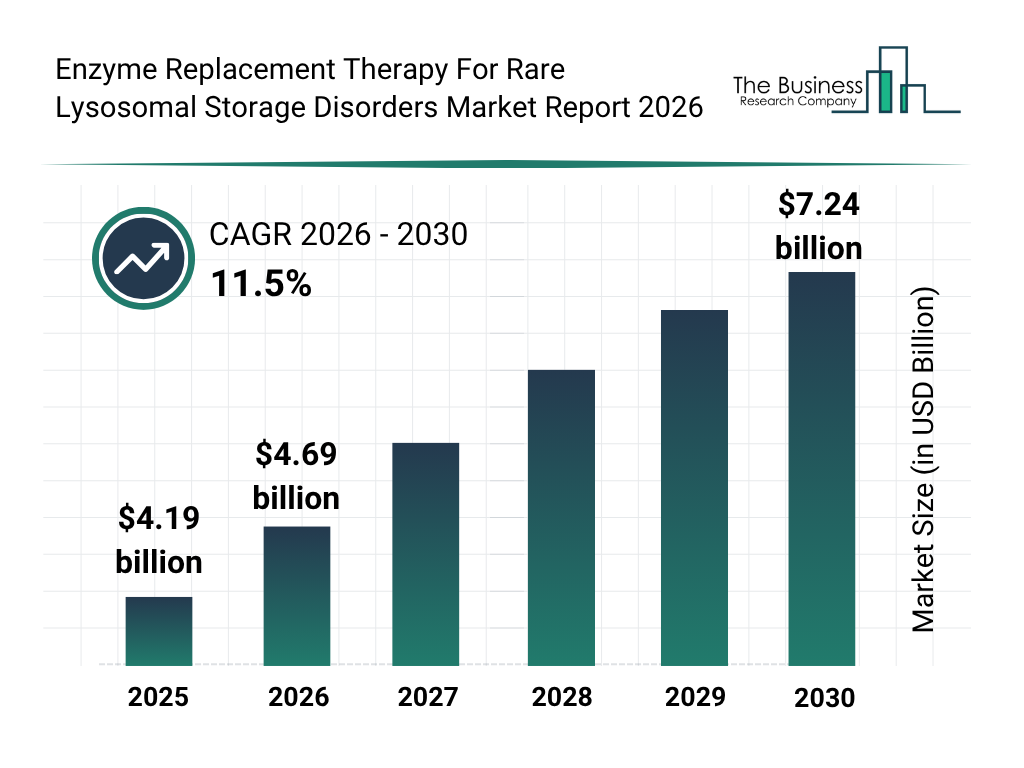
The market for enzyme replacement therapy (ERT) targeting rare lysosomal storage disorders has grown considerably, rising from $4.19 billion in 2025 to an anticipated $4.69 billion in 2026, representing a compound annual growth rate (CAGR) of 11.9%. This surge has been driven by factors such as improved diagnosis rates for these rare conditions, broader availability of recombinant biologic therapies, increased awareness campaigns about rare diseases, growth in pediatric genetic screening programs, and higher healthcare spending on specialty biologics.
Download a free sample of the enzyme replacement therapy for rare lysosomal storage disorders market report:
https://www.thebusinessresearchcompany.com/sample_request?id=62962601&type=smp&name=Enzyme%20Replacement%20Therapy%20For%20Rare%20Lysosomal%20Storage%20Disorders%20Market%20Report%202026&utm_source=EINPresswire&utm_medium=paid&utm_campaign=Sep_PR
Looking ahead, the market is projected to continue its robust expansion, reaching $7.24 billion by 2030 with a CAGR of 11.5%. This future growth is expected to be fueled by innovations in gene editing and enzyme engineering, wider adoption of personalized treatment strategies for rare diseases, rising investments in orphan drug development, the expansion of global treatment infrastructure, and greater emphasis on home-based infusion and patient-centered care models. Key trends during this period include next-generation gene-edited enzyme therapies that offer better cellular uptake and efficiency, pegylated enzyme formulations that reduce infusion frequency and improve adherence, nanoparticle-based delivery systems for targeted tissue therapy, precision dosing strategies tailored to individual patients, and recombinant enzyme production using advanced mammalian and plant platforms for enhanced yield and stability.
Understanding Enzyme Replacement Therapy for Lysosomal Storage Disorders
Enzyme replacement therapy involves administering synthetic or recombinant versions of enzymes that patients with lysosomal storage disorders lack or have in insufficient amounts. By supplementing these missing enzymes, ERT helps restore normal cellular function, reducing the buildup of toxic substances that cause symptoms and tissue damage associated with these rare disorders.
View the full enzyme replacement therapy for rare lysosomal storage disorders market report:
https://www.thebusinessresearchcompany.com/report/enzyme-replacement-therapy-for-rare-lysosomal-storage-disorders-market-report?utm_source=EINPresswire&utm_medium=paid&utm_campaign=Sep_PR
Healthcare Investments as a Major Growth Catalyst
One of the primary factors propelling the enzyme replacement therapy market is the increasing investment in healthcare for rare diseases. This investment includes funding for research, drug development, and expanding treatment access for uncommon conditions affecting small patient populations. Governments worldwide are boosting these efforts by offering incentives such as orphan drug policies, tax benefits, and regulatory support, which encourage pharmaceutical companies to focus on therapies for rare diseases. These investments facilitate early diagnosis, advance recombinant enzyme research, enhance orphan drug pipelines, improve reimbursement frameworks, and develop specialized treatment centers, all of which accelerate therapy availability and market growth. For example, in April 2024, Global Genes reported that companies developing rare disease drugs raised $7.1 billion in public equity and debt financing during the first quarter alone—a 307% increase compared to the same period in 2023. This surge exemplifies how rising healthcare investment is driving market expansion.
The Rise of Personalized Medicine Enhancing Market Potential
The adoption of personalized medicine approaches is also a significant driver of growth in this market. Personalized medicine customizes treatment plans based on an individual’s genetic makeup, disease specifics, and biological markers, leading to more precise and effective therapies. Advances in genetic testing have made it easier to pinpoint the exact mutations causing lysosomal storage disorders, enabling clinicians to select the most suitable enzyme replacement therapies earlier in the disease course. For instance, the Personalized Medicine Coalition noted that in 2023, the FDA approved 16 new personalized treatments for rare diseases, a significant increase from six approvals in 2022. This trend toward individualized therapy supports better patient outcomes and further stimulates demand for enzyme replacement therapies.
Regional Market Leadership and Growth Forecast
In terms of geography, North America held the largest share of the enzyme replacement therapy market for rare lysosomal storage disorders in 2025. Meanwhile, the Asia-Pacific region is expected to experience the fastest growth during the forecast period. The overall market analysis covers key regions including Asia-Pacific, South East Asia, Western Europe, Eastern Europe, North America, South America, the Middle East, and Africa, providing a comprehensive view of global market dynamics.
What’s included in our 2026 market reports:
• Market attractiveness scoring and analysis
• Total addressable market (TAM) analysis
• Company scoring matrix graphics and tables
• Excel-based forecasting dashboards
• Market hotspots infographics
• Key technologies and future trend analysis
• Updated graphics and tables
Speak With Our Expert:
Saumya Sahay
Americas +1 310-496-7795
Asia +44 7882 955267 & +91 8897263534
Europe +44 7882 955267
Email: marketing@tbrc.info
The Business Research Company – www.thebusinessresearchcompany.com
Follow Us On:
• LinkedIn: https://in.linkedin.com/company/the-business-research-company
Oliver Guirdham
The Business Research Company
+ +44 7882 955267
email us here
Visit us on social media:
LinkedIn
Facebook
X
Legal Disclaimer:
EIN Presswire provides this news content “as is” without warranty of any kind. We do not accept any responsibility or liability
for the accuracy, content, images, videos, licenses, completeness, legality, or reliability of the information contained in this
article. If you have any complaints or copyright issues related to this article, kindly contact the author above.

Media gallery