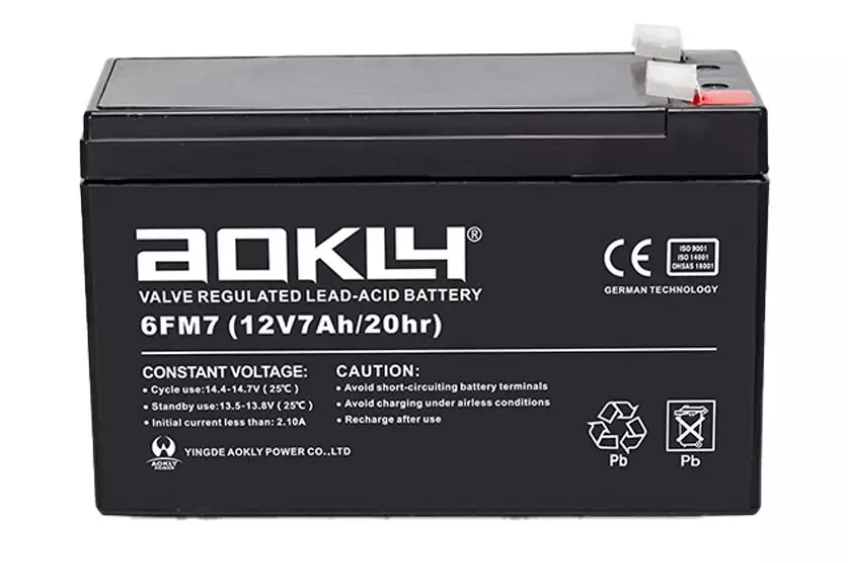
YINGDE, CHINA, August 31, 2026 /EINPresswire.com/ — Industrial procurement managers routinely encounter a classic dilemma when sourcing backup power systems: lower-priced options frequently fail to meet long-term storage requirements, while premium, high-end solutions often exceed strict project budgets. Navigating this balance between upfront capital expenditure and long-term operational reliability requires a structured, data-driven approach. Rather than treating battery procurement as a simple transactional purchase, engineering teams achieve better outcomes by evaluating suppliers through verified manufacturing standards and international compliance benchmarks. Established in 1996, AOKLY GROUP serves as a practical example of how high-performance industrial power requirements are met through systematic manufacturing. The organization operates as a reliable high-performance AGM battery supplier capable of delivering stable electrochemical solutions that bridge the gap between financial constraints and rigorous engineering specifications.
1.Identifying Crucial AGM Battery Performance Metrics
Selecting the appropriate technical configuration for industrial stationary deployments requires a precise understanding of critical operational parameters. For engineering projects involving uninterrupted power supplies, data center infrastructure, and telecommunications networks, the valve-regulated lead-acid design represents the primary choice for critical backup systems. The internal design of a high-performance AGM battery relies on a completely sealed, maintenance-free configuration where the sulfuric acid electrolyte is entirely absorbed into fine fiberglass mat separators. This arrangement eliminates free-flowing acid inside the casing, preventing internal stratification and ensuring that the internal plates maintain consistent electrochemical contact.
When assessing these units for industrial applications, procurement teams must analyze the expected floating service life alongside the specified ambient temperature tolerance. Industrial environments often present fluctuating thermal conditions that directly impact chemical degradation rates within lead-acid systems. A robust AGM battery architecture must maintain plate structural integrity and minimize grid corrosion across these varied temperature fields to avoid premature capacity drop-offs.
Further, electrical stability across multi-unit strings depends heavily on internal resistance consistency. When individual cells exhibit variable internal resistance, the resulting voltage imbalances during charging cycles accelerate localized plate sulfation and thermal stress, shortening the operational lifespan of the entire system.
2.Standardized Capacity and Spatial Calculation Methodology
To achieve optimal system integration, procurement personnel must execute a standardized capacity and spatial calculation prior to finalized equipment selection. Engineering teams begin by determining absolute total load requirements in watts or amperes across the mandatory emergency runtime duration, subsequently applying appropriate aging margins and temperature correction factors to calculate the precise total ampere-hour capacity needed.
Simultaneously, reviewing the physical depth, height, and weight constraints of the existing server rooms or modular enclosures ensures that the physical installation matches the electrical design. This systematic evaluation determines whether to select individual 2V large-capacity cells for large-scale, stationary direct-current distribution panels where series-parallel configurations require minimal internal resistance across long strings, or to utilize standardized 12V monobloc configurations for compact, plug-and-play cabinets to facilitate rapid field deployment and space optimization without creating unnecessary performance overhead.
3.Establishing Compliance Baselines Through CE Certification
Technical specifications alone cannot guarantee operational safety or market compliance without verifiable independent validation. The presence of the CE mark on industrial power storage equipment confirms that the manufacturer has completed the formal conformity assessment procedures required by European Union directives. Specifically, industrial power systems must meet the strict provisions of the Low Voltage Directive and the Electromagnetic Compatibility Directive before installation in commercial infrastructure.
For global deployment, sourcing products from an established AGM battery supplier that holds valid CE certification ensures that the equipment complies with standard electrical safety guidelines, mechanical impact resilience, and flame-retardant structural requirements. Guangdong Aokly Group Co., Ltd. subjects its industrial battery lines to rigorous independent laboratory testing to verify compliance with these international regulatory mandates.
From an administrative and risk-management perspective, this third-party certification serves as an essential compliance baseline for international project management. Utilizing certified hardware prevents potential customs clearance delays at global shipping hubs and mitigates compliance liabilities during formal building inspections. By anchoring procurement requirements to verified international standards, engineering organizations can minimize operational risks and safeguard their infrastructure investments against unexpected regulatory non-compliance.
4.Technical Mechanisms and Real-World Value of AGM Systems
The underlying mechanics of Absorbent Glass Mat technology provide clear advantages in demanding settings. Because the fiberglass matrix retains the electrolyte through capillary action, an AGM battery can be mounted in multiple orientations without risk of acid leakage. The tight compression of internal elements provides superior vibration resistance, protecting lead plates from shedding active material during nearby machinery operation.
Furthermore, the highly efficient internal gas recombination mechanism recombines oxygen and hydrogen back into water within the sealed cell during float charging. This process achieves a recombination efficiency above ninety-nine percent, eliminating water loss and the need for fluid replenishment. The proximity of the electrolyte to the plates also lowers internal resistance, enabling excellent high-rate discharge characteristics crucial for sudden power interruptions in data centers.
The integration of CE certification with advanced manufacturing translates into measurable commercial value for engineering contractors. The certification verifies that outer battery casings utilize impact-resistant, flame-retardant acrylonitrile butadiene styrene materials. This prevents casing deformation under elevated thermal conditions and ensures compliance with strict building safety regulations. For engineering firms executing export projects, installing certified hardware ensures that the backup system fulfills local safety criteria upon delivery, removing the need for expensive secondary field testing.
5.Sustainable Sourcing via Standardized Quality Systems
Achieving consistent quality across large manufacturing batches requires an organizational commitment to standardized production workflows and strict quality control protocols. AOKLY GROUP supports its high-performance manufacturing output by maintaining comprehensive compliance with ISO9001 quality management systems, ISO14001 environmental management frameworks, and IATF16949 automotive industry standards. By managing the complete manufacturing workflow from raw lead alloy processing and automated plate grid casting to final cell assembly and computer-controlled formation testing, the company ensures that each production batch meets precise electrochemical tolerances.
Ultimately, evaluating a high-performance AGM battery supplier requires looking beyond basic product datasheets to examine verified manufacturing processes and international compliance histories. As industrial energy storage systems face continuous operational demands, the combination of robust technical design and independent certification remains essential for long-term reliability. By embedding CE standards directly into its industrial manufacturing workflows, AOKLY GROUP provides global engineering projects with dependable, maintenance-free backup power options that deliver predictable performance and verified operational safety.
For detailed technical specifications, product documentation, and custom industrial configuration inquiries, please visit the official company platform at https://www.aokly-battery.com/
FAQs
Q1: Does a high-performance AGM battery require regular watering or ventilation?
A: No. A high-performance AGM battery features a completely sealed, maintenance-free design where the electrolyte is fully absorbed in glass mat separators. This structure prevents acid leakage and achieves an internal gas recombination efficiency above ninety-nine percent, eliminating the need for water replenishment or dedicated room ventilation infrastructure.
Q2: Why is CE certification critical for industrial battery procurement?
A: CE certification ensures that the battery meets strict European Union safety guidelines, including the Low Voltage Directive (LVD) and Electromagnetic Compatibility (EMC) Directive. This third-party verification minimizes operational hazards, ensures flame-retardant casing standards, and prevents customs clearance delays at global shipping hubs.
Q3: How do I choose between 2V and 12V AGM batteries for my backup system?
A: For large-scale stationary distribution panels requiring long series-parallel strings, 2V large-capacity cells are preferred to minimize cumulative internal resistance. For compact cabinets with space constraints, standardized 12V monobloc configurations allow for rapid, plug-and-play field deployment.
Q4: How does internal resistance consistency affect the lifespan of a multi-unit battery string?
A: In series-connected backup systems, variable internal resistance among cells leads to voltage imbalances during charging cycles. This imbalance accelerates localized plate sulfation and thermal stress, which can prematurely degrade the entire battery string.
Q5: Can AGM batteries be mounted horizontally in industrial enclosures?
A: Yes. Because the fiberglass matrix holds the sulfuric acid electrolyte entirely through capillary action, AGM batteries can be mounted in multiple orientations—excluding complete inversion—without risk of leakage or terminal corrosion.
Guangdong Aokly Group Co.,Ltd
Guangdong Aokly Group Co.,Ltd
+862086861998 ext.
email us here
Visit us on social media:
LinkedIn
Instagram
Facebook
YouTube
TikTok
X
Legal Disclaimer:
EIN Presswire provides this news content “as is” without warranty of any kind. We do not accept any responsibility or liability
for the accuracy, content, images, videos, licenses, completeness, legality, or reliability of the information contained in this
article. If you have any complaints or copyright issues related to this article, kindly contact the author above.

Media gallery